
Cloud Native SOC Providers in India
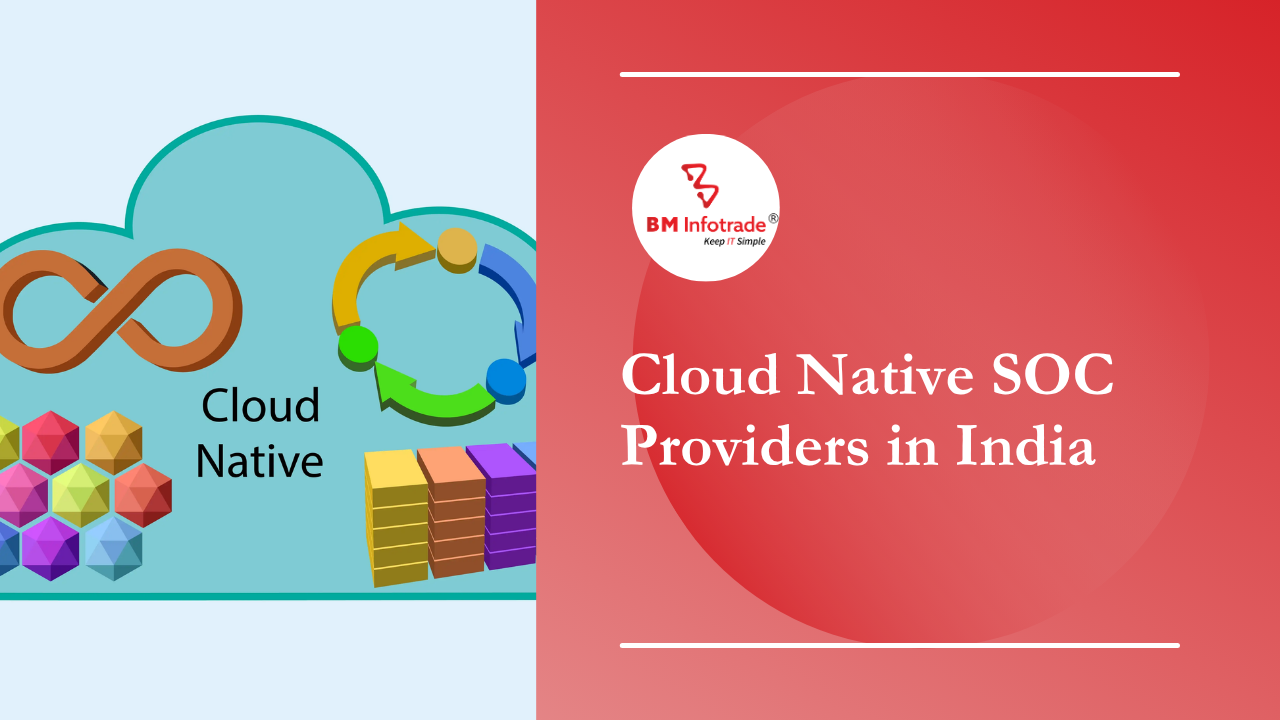
Cloud Native SOC providers in India deliver scalable, AI-driven security operations using cloud-first architectures to detect, respond, and mitigate threats in real time.
15
Apr
Cloud Native SOC Providers in India
Table of Contents
- What Is a Cloud Native SOC?
- Key Capabilities You Should Expect from Cloud Native SOC Providers
- How Cloud Native SOC Architecture Works (Simple Explanation)
- Who Needs Cloud Native SOC Services in India?
- How to Evaluate Cloud Native SOC Providers in India
- Pricing Expectations in India (What Usually Drives Cost)
- Benefits of Cloud Native SOC for Indian Businesses
- Final Thoughts
- FAQs
The level of cyber hazards in the country of India is growing rapidly and at greater complexity, and the traditional ways of doing business with regard to securing them are falling short. Examples of this include those organisations, many of whom still work from a legacy style security operations centre (SOC) methodology of heavy hardware-based, slow to scale and costly to expand. Enter cloud-based SOCs! Instead of building an on-premises SOC with traditional/legacy software tools, a cloud-based SOC is being developed to operate within a hosted environment through cloud-based architecture, modern-day telemetry pipe-lines and an automated detection/response workflow.
To put it simply, with a cloud-based SOC, you will gain 24x7 surveillance, speedier detection of threats and a larger degree of scalability without the requirement of building/maintaining a brick-and-mortar SOC operation and the attendant need for an in-house SOC team.

What Is a Cloud Native SOC?
A Cloud Native SOC (Secured Operations Centre) Is an Operations' Center of Secured Operations Built with Cloud Technology and Cloud Design Principles. It is Designed to Receive Logs and Security Events From Endpoints, Networks, Identities, SaaS Applications, and Cloud Workloads. It Uses Cloud-Based Analytics, Threat Intelligence, Automation, and Expert Analysts to Identify and Respond to Security Incidents.
Unlike a Traditional SOC, a Cloud Native SOC Is Not Constrained by Physical Infrastructure. It Can Increase or Decrease in Size Based on the Volume of Logs, the Number of Users, the Volume of Workloads, and the Level of Threat.
Why Cloud Native SOC Is Becoming Popular in India
India faces many different types of cybersecurity challenges, such as: the rapid adoption of the cloud; increased usage of software as a service (SaaS); distributed workforces, increased activity with ransomware; and increased pressure to comply with regulations. Therefore, cloud-native security operation centre (SOC) providers are preferred by companies because they have faster times to deploy, they are easier to scale, and they are typically more cost-effective than setting up an in-house SOC.
Additionally, organisations also value the flexibility that can be gained through cloud-native SOC services. For instance, you can begin operations at a smaller level with monitoring and alerting; then you can expand operations to include more advanced forms of threat hunting, managed detection and response (MDR), incident response support, and compliance reporting.
Key Capabilities You Should Expect from Cloud Native SOC Providers
Typically, an organisation in India that is a trusted cloud native SOC will offer an integrated package of technology, people, and processes. Some key capabilities of a cloud native SOC provider include ongoing monitoring, alert triage, threat detection engineering and incident response support. Additionally, many SOCs have SIEM or SOAR capability, typically providing their own platform or simply integrating with Microsoft Sentinel, Splunk, QRadar, Elastic or Chronicle type solutions.
Another common capability is providing cloud workload visibility. To deliver on this effectively, a cloud native SOC must have competency in securing the public cloud environments of AWS, Azure, and GCP, be familiar with the different types of log sources available, understand IAM events, have applicable knowledge around container/Kubernetes security, and provide posture monitoring relating to cloud resources. As a result, if a provider's service offering is simply centred around monitoring firewalls and endpoints but cannot analyse and interpret cloud identity events or API logs, that provider cannot be considered truly cloud native.
How Cloud Native SOC Architecture Works (Simple Explanation)
Typically, the flow for implementing a cloud native SOC includes the following steps: collection of logs and events from all of your endpoints, identities, servers, applications, and cloud service providers; normalisation of the logs; enrichment of them with threat intelligence; running detection rules; and behavioural analytics, where all this information is analysed to generate high-risk detections, which will be sent to SOC analysts for verification of an incident, investigation into the scope of that incident, and assisting in containment of the threat.
Additionally, many providers utilise automation as well. For example, should a suspicious log-in attempt be made, a cloud native infrastructure will automatically respond depending on your approvals and established playbook to disable that user’s account, isolate their endpoint, block the malicious IP, or create an incident ticket.
Who Needs Cloud Native SOC Services in India?
A cloud-native SOC is not confined to just the needs of large corporations. In India, many medium-sized organisations, as well as startups, SaaS companies, Fintechs, healthcare, manufacturing, and brick-and-mortar stores, are using cloud-native SOC services, especially for businesses that deal with sensitive data or have compliance requirements.
If a company relies on cloud-based applications and/or remote access, customer records, or online payments, a cloud-native SOC can provide risk mitigation without requiring that the company build a full security operations centre internally.
Common SOC Service Models Offered by Indian Providers
Most of the cloud-native SOC providers operating in India have tiered service offerings. A basic tier of service generally includes log collection and monitoring, alerting and monthly reporting. Higher tiers of service generally include things such as threat hunting, correlation tuning, incident response and compliance assistance. The highest tier of service generally includes managed detection and response (MDR), endpoint quarantine, forensic assistance, and breach response readiness.
The right approach for many organisations in India is to implement monitoring and alert triage when first deploying a SOC, and later transition to full MDR once the cloud environment is stable and all of the logging sources have been integrated properly.
How to Evaluate Cloud Native SOC Providers in India
When evaluating prospective service providers, check for actual operational capabilities rather than just their marketing claims. In evaluating potential partners/provider organisations, first check to see if the potential partner provides adequate service (availability, service level agreements and escalation timelines) 24/7. Next, check for tool integration compatibility (e.g., Microsoft 365/Defender/Sentinel/AWS Security Services/EDR/Firewall/Identity systems).
In addition to the above, inquire about detection quality and effectiveness. Is the provider creating and tuning detection rules specific to your environment, or are they only using generic detection rules which cause alert fatigue? Alert fatigue is a significant contributor to the failure of many Security Operations Centre (SOC) projects in India because teams have been inundated with excessive alert volume, resulting in their being unable to identify real attacks.
Finally, verify the provider’s incident response capabilities relative to ransomware, credential theft, insider threats and cloud account compromises, and their ability to contain and recover from these incidents.
Pricing Expectations in India (What Usually Drives Cost)
The price structure for SOCs in India often varies based on the ingestion volume of logs, types of assets or endpoints being monitored, and the response depth desired (i.e., just monitoring or managed response). Other factors are whether the provider's technology stack utilises SIEM software licensing from the SOC vendor or allows you to use your existing SIEM system.
The most important piece of advice here is to request fair pricing that clearly distinguishes platform fees vs log ingestion fees from analyst coverage, and separate any phased-in incident response costs. This way, when your log volumes increase unexpectedly, you won’t have any surprises down the road.
Benefits of Cloud Native SOC for Indian Businesses
Finally, the primary advantage is speed. A SOC that is built in a cloud-native way will typically deploy much faster than traditional models, and will naturally exhibit good scalability as your company grows. In addition to speed advantages, you will have better visibility of continuity of operations across SaaS-based and cloud workloads, as many modern attacks are targeting cloud access and identity systems.
Secondly, you will enjoy the cost savings attributable to hardware capital investment vs recurring monthly subscription costs. Rather than spending money on hardware, SIEM software infrastructure, and 24/7 staffing, you can utilise a managed model through an ongoing subscription service. You can scale up or down (i.e., increase or decrease the level of managed support from the provider) at any time according to your business needs.
Final Thoughts
Cloud-based SOCs available in India are now an affordable option to develop and maintain operationally sound security operations within an organisation without having to build the entire operation in-house. A good provider will provide you with faster detection, improved cloud visibility and expert assistance in case of an incident, all while maintaining a scalable and predictable delivery model.
By properly selecting a vendor (based on coverage, capabilities to integrate with your existing systems, quality of detection and maturity of the response process), using a cloud-based SOC will help you significantly reduce your organisation’s cybersecurity risk and significantly increase your overall security readiness in a cloud-first world.
FAQs
1. What is a cloud native SOC?
A Security Operations Centre (SOC) that uses cloud technology to monitor, detect and respond to cyber threats, without the use of physical equipment or infrastructure, is called a Cloud Native SOC.
2. How is a cloud native SOC different from a traditional SOC?
A Cloud Native SOC operates using cloud-based platforms and scales quickly and easily, while traditional SOCs operate with an on-premise setup, making them slower to scale up and having a higher cost associated with them.
3. Who should use cloud native SOC services in India?
Organisations that use cloud SaaS applications or have sensitive customer data, like startups, fintechs, health care, or IT companies, should consider using Cloud Native SOC Services.
4. What services do cloud native SOC providers offer?
There are several services that a Cloud Native SOC will provide, including: 24x7 threat monitoring, alert management, incident investigation, threat hunting, cloud security monitoring and incident response assistance.
5. How much does a cloud native SOC cost in India?
Price will depend on log volume, number of users/devices, and service level selected. In general, the larger the amount of data, or if advanced response services are included in the service, the more expensive the service will become.

Anshul Goyal
Group BDM at B M Infotrade | 11+ years Experience | Business Consultancy | Providing solutions in Cyber Security, Data Analytics, Cloud Computing, Digitization, Data and AI | IT Sales Leader